Asplenium Fern

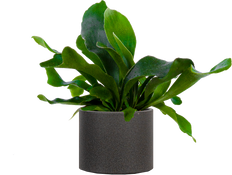
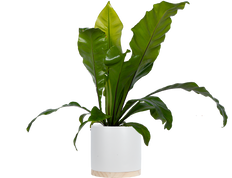
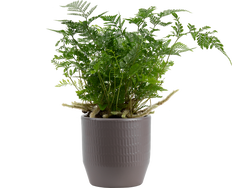
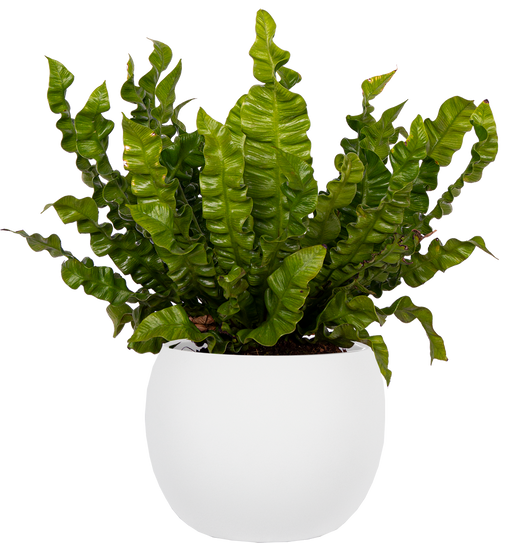
Meet the fern that builds its own nest! Asplenium ferns, better known as bird's nest ferns, come from tropical rainforests, where they perch in the crooks of trees and catch falling leaves in a rosette of glossy, bright green fronds. There are many types, from the classic Asplenium nidus and its wavy-edged 'Crispy Wave' to the narrow-leaved Japanese bird's nest fern (Asplenium antiquum). Pet-safe, compact and happy in a shadier spot, it's one of the easiest ferns to keep looking good indoors.

Browse our fern collection or read the Crispy Wave bird's nest fern care guide.

  • Safe for pets and children
  • Repot once every 2 years
  • Fertilize once a month
  • Partial light or shade
  • Average water

About Asplenium Fern

Origin

Bird's nest ferns are native to tropical rainforests across Southeast Asia, Polynesia (including Hawaii), eastern Australia and East Africa, while Asplenium antiquum comes from Japan, Korea and Taiwan. In the wild they mostly grow on tree trunks and branches under the forest canopy. Their funnel-shaped rosette catches rain and fallen leaves, which slowly break down into food: that's the "nest"!

Air Purifying

Ferns as a group scored well in lab tests on removing formaldehyde from the air, and those broad fronds bring a fresh hit of green to any room. To be honest, one plant won't clean the air in a whole home, so think of it as a small bonus on top of an open window.

Toxicity

Good news for pet parents: bird's nest ferns are considered non-toxic to cats and dogs. The ASPCA lists their close cousin Asplenium bulbiferum as non-toxic, and bird's nest ferns aren't known to contain any toxic compounds. As with any houseplant, a big nibble can still upset a sensitive tummy.

Caring for Asplenium Fern

Watering

Water when the top 25–30% of the soil has dried out, roughly every 7–10 days in spring and summer and a little less in fall and winter. Pour around the edge of the pot rather than into the center rosette, since water sitting in the "nest" can rot the crown. Keep the soil lightly moist but never soggy, and give this amigo a humidity boost (50% or more) with a pebble tray or humidifier during dry Canadian winters.

Light and Placement

Medium to bright, indirect light is the sweet spot, like a few feet back from an east- or north-facing window. Bird's nest ferns handle lower light better than most ferns, they'll just grow more slowly. Keep them out of direct sun, which bleaches and scorches the fronds, and away from heaters and cold drafts.

Nutrition

Feed once a month in spring and summer with a balanced liquid fertilizer diluted to half-strength (or even quarter-strength), poured onto the soil, not into the rosette. Too much fertilizer shows up as brown spots and crispy edges on the fronds. Skip the snacks in fall and winter.

Repotting

These amigos have small root systems and like a snug pot, so repot every 2–3 years in spring, or once roots fill the pot. Choose a pot 1–2 inches larger with drainage holes and an airy mix, like regular potting soil with a handful of orchid bark and perlite. Keep the base of the rosette at the same height as before, since burying it invites rot.

Pruning and Flowering

As a true fern, this amigo never flowers: it reproduces with spores. Those neat brown lines on the underside of mature fronds are spore cases, not pests! Snip off old, yellow or damaged fronds at the base with clean scissors, but never cut into the center rosette, where all new growth unfurls.

Asplenium Fern SOS

Illness

Crown rot from water in the center and root rot from soggy soil are the biggest dangers. Brown, crispy edges usually mean dry air, cold drafts or too much fertilizer, while pale, washed-out fronds point to too much sun. Check the undersides now and then for scale insects and mealybugs, and skip leaf-shine products, which can damage the fronds.

Now sit back and relax, our App will take care of the rest.

Hassle-free plant care with the Plantsome App!

Get the app